
1. Mythological Legend
According to Hindu mythology, the temple's origins are deeply tied to the creation of Pushkar itself.
- The Legend of Brahma's Yagna: Lord Brahma (the creator god) was performing a grand yagna (sacrificial ritual) on the banks of Pushkar Lake. During the ceremony, Lord Shiva arrived in the guise of an unconventional, skull-bearing tantric mendicant.
- The Skulls in the Yagna: Unaware of the yogi's true identity and disturbed by his appearance, those performing the ritual insulted and denied him entry. Angered by this treatment, Lord Shiva used his divine powers to fill the entire yagna site with human skulls.
- The Apology: Realizing his mistake, Lord Brahma meditated to seek clarity, recognized the yogi as Lord Shiva, and apologized. To honor Shiva and appease his anger, Brahma established this temple next to the ritual site, dedicating it to Shiva as "Atmateshwar" or "Atmateshwar."
"Where Brahma's pride met Shiva's wrath, atonement built a temple that still stands as a testament to divine reconciliation."
2. History and Reconstruction
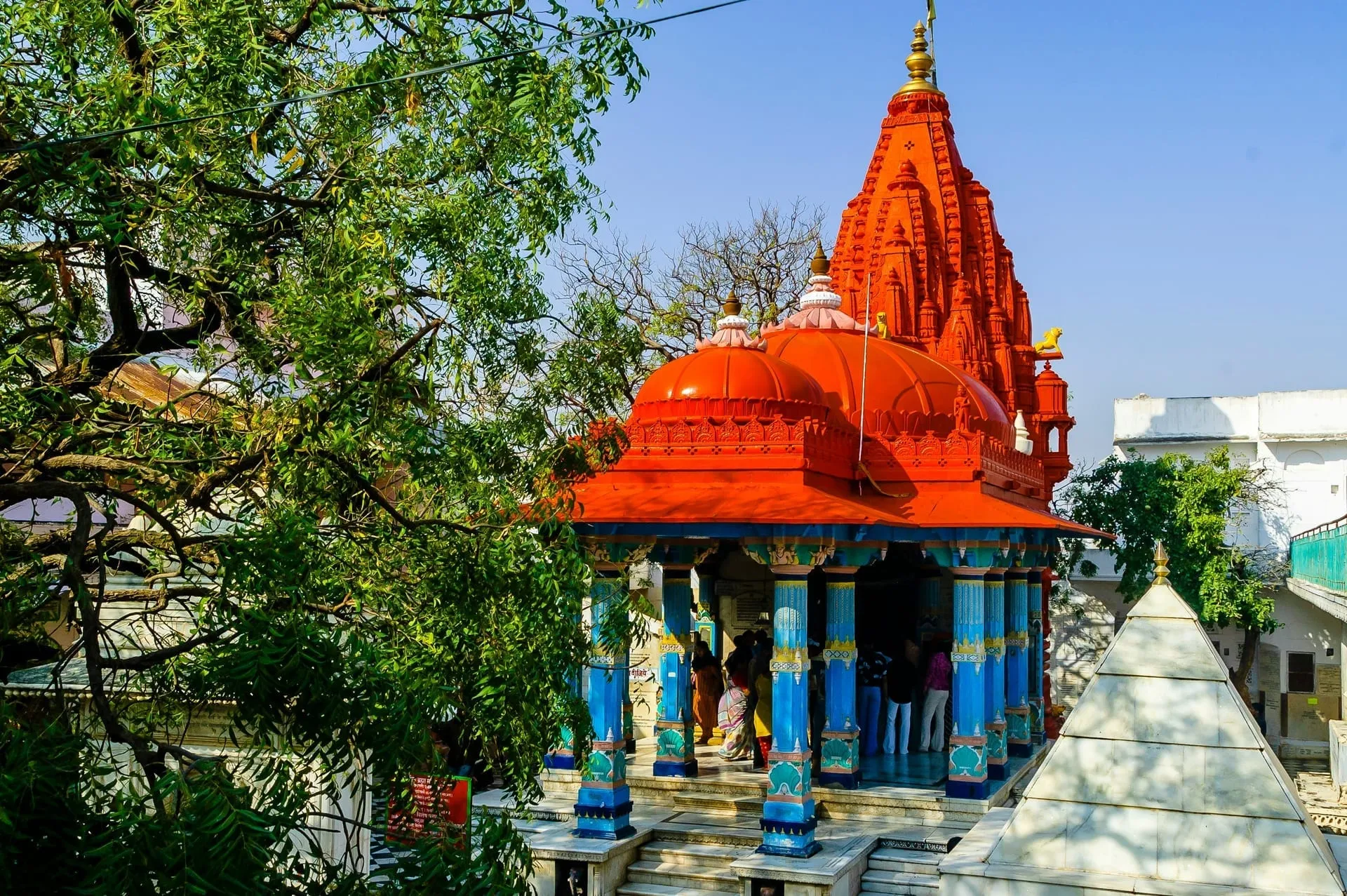
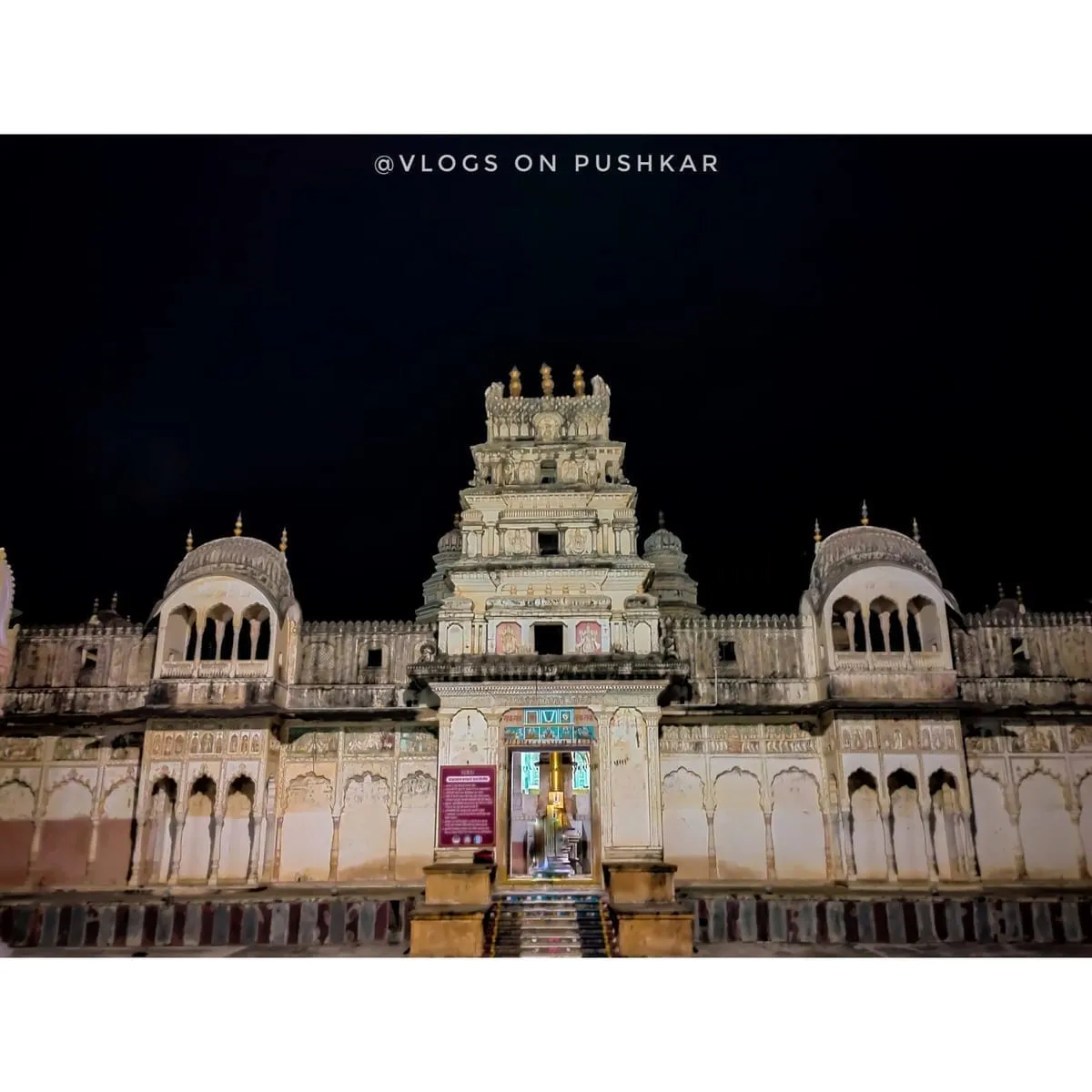
- 12th-Century Origins: The temple was originally constructed around the 12th century AD (circa 1100–1200 AD) during the reign of the Chauhan dynasty (often attributed to rulers like Raja Ajaypal or King Anaji Chauhan).
- Destruction & Revival: Like many other ancient temples in the region, the original structure was heavily damaged or destroyed during the 17th-century rule of the Mughal Emperor Aurangzeb. It was subsequently restored and rebuilt in the 19th century, retaining its historic design and spiritual significance.
3. Unique Architecture and Subterranean Design
- Underground Cave Structure: One of the temple's most unique characteristics is that its main sanctum sanctorum (garbhagriha) lies several feet below the current ground level. Visitors descend into a subterranean, cave-like cellar to offer prayers. This design naturally keeps the inner chamber exceptionally cool during harsh Rajasthan summers and comfortably warm in the winter.
- Hemadpanthi Style: The architecture exhibits elements of the Hemadpanthi style, which flourished during the Yadava Dynasty of the Deccan. The style is characterized by the use of locally sourced black stone and lime, sturdy masonry, and highly decorative details.
- Single-Stone Ceiling: The cellar's ceiling is meticulously carved out of a single large stone, showcasing the exemplary craftsmanship of 12th-century artisans.
4. The Presiding Deity and Sacred Icons
The temple features two primary representations of Lord Shiva:
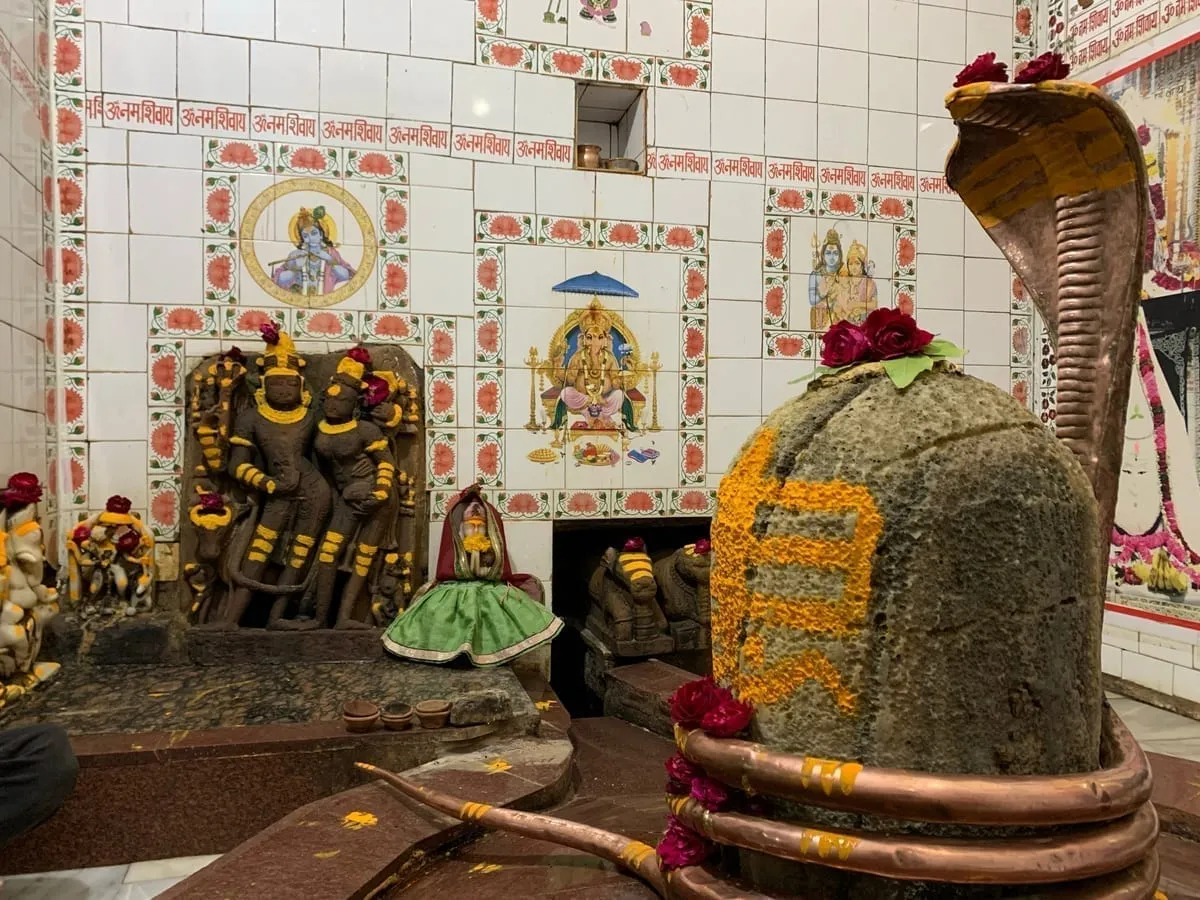
- The Shiva Lingam: The main deity in the subterranean sanctum is a large Shiva Lingam encircled by a copper snake.
- The Five-Faced (Panchamukhi) Statue: The temple also houses a magnificent five-faced statue of Lord Mahadev made of white marble. The five faces are named Sadyojat, Vamdev, Aghor, Tatpurush, and Ishan. Four faces point toward the cardinal directions, while the fifth face points upward, symbolizing purity and spiritual ascension. These five faces represent the Panchabhuta (five elements of nature): Prithvi (Earth), Varun (Water), Vayu (Air), Agni (Fire), and Akash (Ether/Space).
- The Silver Turtle: Embedded in the marble floor of the assembly hall is a silver turtle, which in Hindu temple architecture symbolizes patience, longevity, and the withdrawal of senses during meditation.
5. Key Festivals and Rituals
The most celebrated festival at the temple. The temple is adorned with lights, and thousands of devotees gather to perform rituals and offer prayers throughout the night.
During the holy monsoon month, a massive influx of pilgrims visits to pour milk, curd (dahi), ghee, honey, and water over the Shiva Lingam.
Placing Bel (bilva) leaves on the Shiva Lingam is considered highly auspicious. Unmarried women often perform these rituals here to pray for a virtuous husband.
6. Visitor Information
Open daily from 6:00 AM to 6:00 PM. Some seasonal schedules observe afternoon closing hours: 9:30 AM – 1:30 PM and 4:30 PM – 7:30 PM.
Free to all visitors.
Main Market Road, Badi Basti, near Pushkar Lake. Easily walkable from the Brahma Temple and main lake ghats.
The cooler winter months from October to March are ideal. Visit early morning to experience the peaceful atmosphere of the cave temple before crowds arrive.