
Mythology & Spiritual Legends
The Snake Mountain Legend
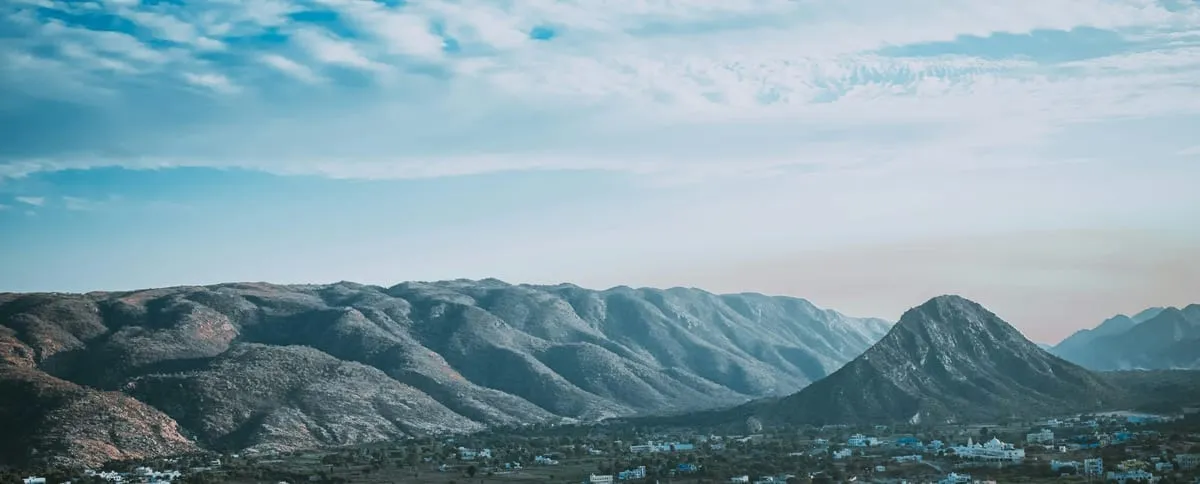
According to local Rajasthani folklore, Naga Pahar (literally translated as Snake Mountain) derives its name from its serpent-like silhouette that winds between Ajmer and Pushkar. Ancient myths tell of a magical mountain that was destined to grow infinitely. Fearing it would touch the heavens and disrupt the cosmic order, the revered Vedic sage Agastya Muni stepped in and anchored the mountain, halting its growth forever. Today, locals believe the mountain is actually shrinking in height very slowly over centuries, and will one day disappear entirely.
Lord Brahma's Son Vatu
The hills are also associated with the Vedic legend of Vatu, the mischievous son of Lord Brahma. According to local scriptures, Vatu committed an offense and was punished. Seeking penance and escape from cosmic wrath, he fled to Naga Pahar, where he hid in the deep caves, turning the mountain range into a site of spiritual reflection and atonement.
Naag Kund & Sacred Caves (Agastya, Bhartrihari & Vishwamitra)
The Serpent Pool (Naag Kund)
High up in the folds of the hill range lies the legendary Naag Kund. According to Hindu mythology, this sacred pool is associated with serpent deities (Nagas) and is believed to possess divine healing properties. Taking a holy dip here, especially during auspicious festival days, is said to cure skin ailments and ward off astrological curses (such as Kaal Sarp Dosh).
Agastya Muni's Hermitage
Naga Pahar houses a cave where Sage Agastya Muni is believed to have resided and performed severe penance (tapasya). The cave serves as a quiet shrine where pilgrims and trekkers offer prayers in a serene setting, detached from the busy tourist lanes of Pushkar town below.
Bhartrihari Cave (Bhartrihari Gufa)
Further up the rocky slopes lies the legendary cave of Bhartrihari, the ruler of Ujjain who renounced his kingdom to live as a Shaiva yogi. Devotees believe King Bhartrihari spent years meditating in the absolute silence of this cave range, which remains a focal point for local ascetics.
Maharishi Vishwamitra's Hermitage
The mountain is also associated with the legendary Vedic sage Vishwamitra. According to ancient Puranas, Vishwamitra performed intense penance (tapasya) on the rugged cliffs of Naga Pahar. The local scriptures state that it was here in this forest range where the celestial nymph Menaka was sent to test his spiritual focus.
Origin of the Luni River
Ecological Significance
Naga Pahar holds immense geographic and ecological value as the source of the Luni River. The river originates in the Pushkar valley from the slopes of these hills, running through the desert plains of southwest Rajasthan before terminating in the desert delta region. This saline river is a unique natural lifeline for Rajasthan.
Trekking & Trails
The Trekking Trail
For adventure enthusiasts, Naga Pahar offers a moderately challenging trekking experience. The trail winds through dry deciduous scrub forests, rocky outcrops, and sand deposits. Unlike the paved stairs of Savitri Temple, Naga Pahar is a raw, unpaved nature trail, providing a rustic and peaceful hiking experience away from crowds.
Panoramic Viewpoints
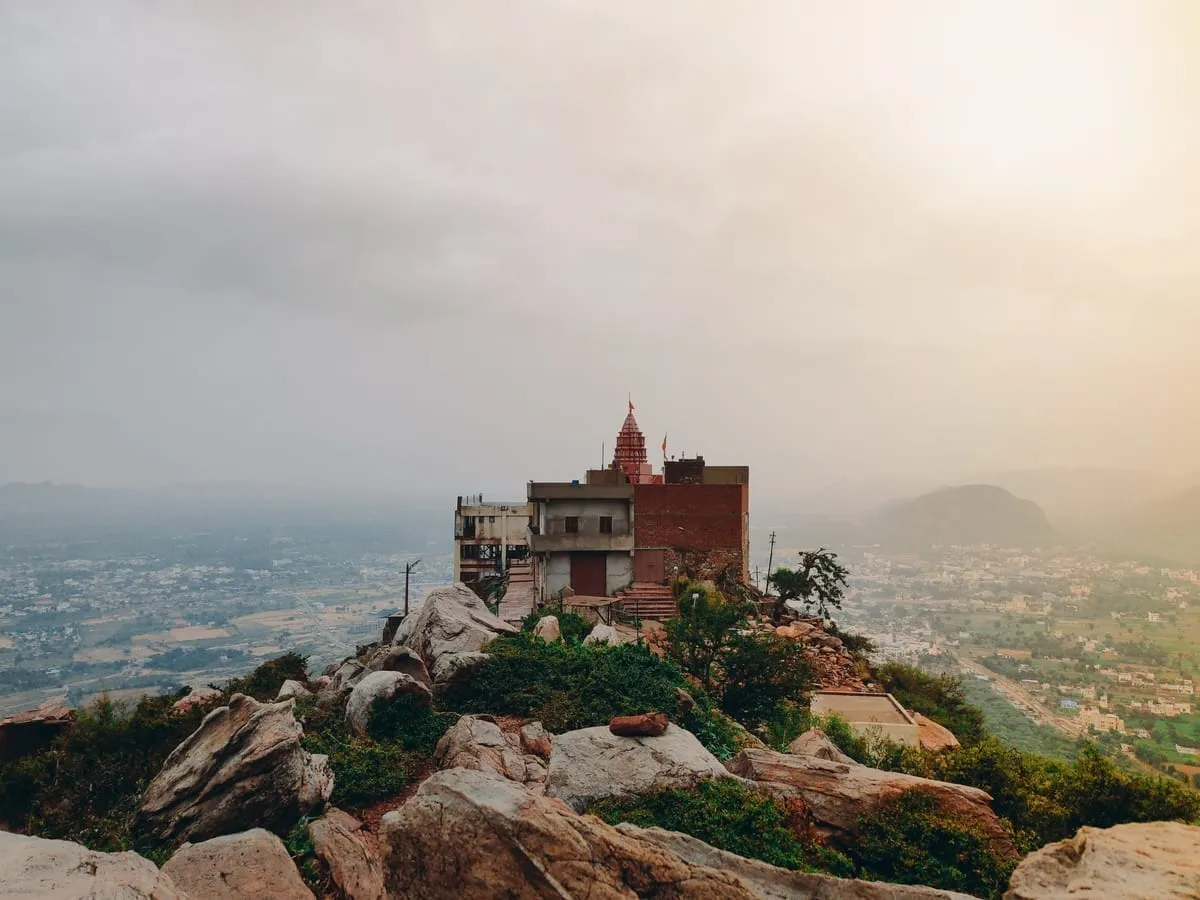
As you ascend, the ridge offers sweeping, panoramic vistas. On one side, you can see the white-washed buildings and temple spires surrounding the holy Pushkar Lake; on the other side, the bustling city of Ajmer is visible beyond the mountain pass. The sunset views from the ridge are spectacular, painting the Thar Desert in deep shades of amber and indigo.
Visitor Information & Safety
- How to Reach: The base of the trek starts near the Ajmer-Pushkar road pass. You can hire an auto-rickshaw or take a local bus from the Pushkar bus stand to the trailhead (approx. 4km).
- Preparation: Carry at least 2 liters of water per person. There are no shops or vendors along the mountain trail. Sturdy trekking or running shoes with good grip are essential.
- Safety Tip: It is recommended to hike in groups and complete the descent before dusk, as the trail is not illuminated and the rocky terrain can be difficult to navigate in the dark.