
The World's Greatest Desert Fair
Each November, the barren desert sands just north of Pushkar town transform into one of the most extraordinary spectacles on earth. The Pushkar Camel Fair (officially Kartik Mela) began as a purely commercial livestock event — a trading post for camel and horse herders from across the Thar Desert — and over centuries evolved into a full religious and cultural celebration culminating in a mass pilgrimage on Kartik Poornima (full moon night).
Today, the fair draws over 200,000 visitors from India and around the world across its 10-day run, making it one of Rajasthan's most photographed and celebrated events.
Fair Timeline — 10 Days
Please note: The schedule presented below is tentative. We will share the exact, detailed day-by-day plan as soon as it is officially launched by the authorities, and will add more details for each day.
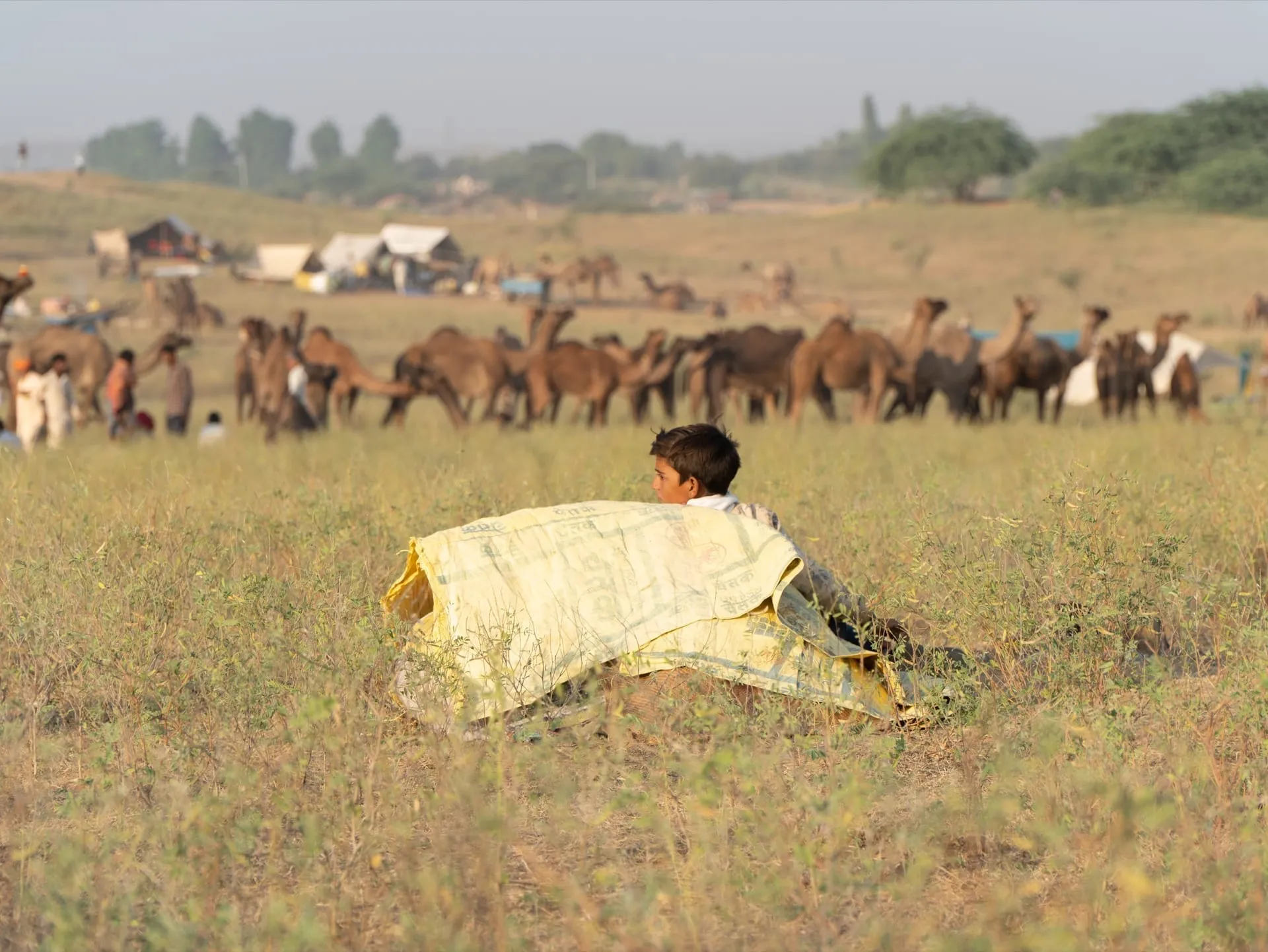
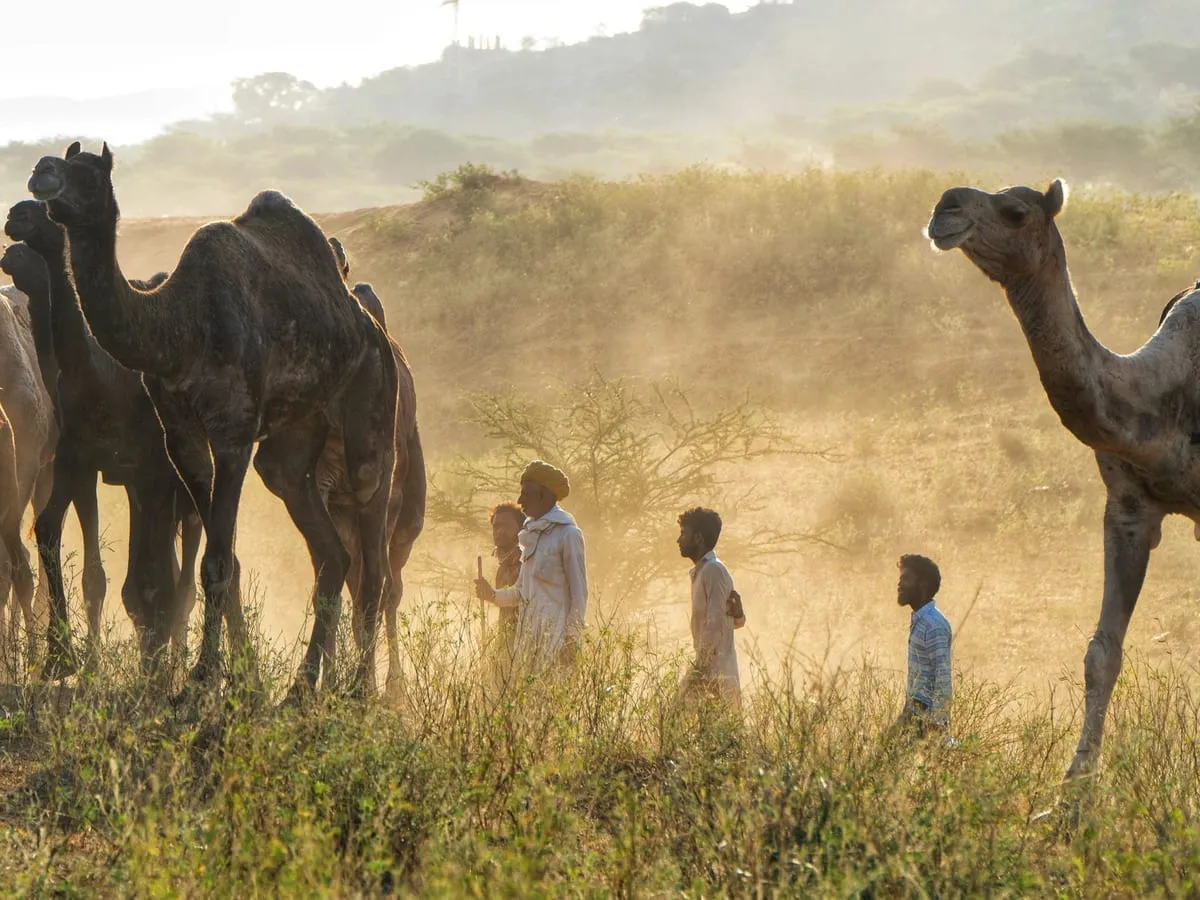
The dunes are covered in thousands of camels and horses. Arrive early in the morning to witness herders negotiating trades in their desert encampments.
Animal trading slows down as herders begin departing. The focus shifts to the cultural arena (camel decoration, tug-of-war, and traditional folk dancing).
Very few camels remain on the dunes. The action moves to the lake ghats for the Kartik Poornima baths, lighting oil lamps on the ghat steps, and evening aartis.
What to See & Do
- Camel Trading Area: The main fair ground — arrive at 7:00 AM to watch herders negotiate trades in the early morning light
- Folk Performances: Free performances in the cultural arena — Kalbelia snake-dancer performances are the highlight
- Hot Air Balloon Rides: Available during fair week — book 2–3 days in advance. Dawn flights give aerial views of the entire fair
- Camel Safari: Organized rides into the dunes begin at the fair's edge — negotiate the price beforehand.
- Photography Workshops: Several tour operators run guided photography walks at golden hour
- Kartik Snan: The full moon ritual bath in Pushkar Lake — a once-in-a-lifetime spectacle of faith
Where to Stay During the Fair
Large tented camps with hot showers, proper beds, electricity and catering. Set up close to the fair ground. Book 3–4 months in advance.
Pushkar's haveli hotels offer rooftop views of the fair grounds. The best are on the northern edge of town. Book August–September.
For general accommodation options (heritage havelis, lake view hotels, guesthouses, desert camps), see our full accommodation guide →
Photography Guide
The Pushkar Camel Fair is a dream destination for photographers. To capture the best shots while remaining respectful, keep these tips in mind:
- Golden Hour at the Dunes: The best shots of camel herders are taken early in the morning (6:30 AM – 8:00 AM) or late afternoon (4:30 PM – 6:00 PM) when the dust creates a beautiful haze in the sun.
- Portraits: Always ask for permission before taking a close-up photo of locals, camel herders, or sadhus. Some may request a small tip for posing, which is a normal practice here.
- Bathing Ghats: Photography is strictly prohibited at the sacred bathing ghats. Keep your camera inside your bag when walking along the lake edge.
- Gear Recommendations: A telephoto lens (70-200mm) is highly recommended to capture candid shots from a distance without intruding. Carry a dust blower or protective cover to shield your camera from the desert sand.
For ghat-specific photography rules, see our ghat photography guide →
Responsible Tourism at the Fair
The Camel Fair is a deeply sacred and culturally significant event for local communities. Please remember:
- Always ask permission before photographing individuals — especially during religious ceremonies
- Do not ride camels that appear distressed or malnourished
- Bargain respectfully — aggressive haggling at cultural stalls is disrespectful
- Avoid plastic — bring reusable water bottles, the fair generates enormous waste
- Support local artisans directly — many folk performers and craftspeople rely on fair income for half the year