
History & Vaishnava Heritage
Built in 1823 in Pushkar by Seth Puran Mal Ganeriwal, a wealthy merchant from Hyderabad, the Old Rangji Temple stands as the first temple of the South Indian Ramanuja Sampradaya in Rajasthan. The merchant, a devout Vaishnava, was deeply inspired by the Sri Ranganathaswamy Temple in Srirangam, Tamil Nadu, and sought to recreate its spiritual essence here.
Legend has it that Seth Puran Mal Ganeriwal, after a transformative pilgrimage to Srirangam, felt a divine calling to establish a shrine for Lord Vishnu in Pushkar. He commissioned master artisans from the south to travel to Rajasthan, bringing with them the architectural traditions of the Dravidian region. The temple became a spiritual bridge between the northern and southern schools of Vaishnavism, and to this day it remains an important centre for the Ramanuja Sampradaya in North India.
"A merchant's devotion, an artisan's craft, and a deity's grace — the Old Rangji Temple is where the Dravidian soul meets Rajasthani spirit."
Architecture
The temple is a magnificent synthesis of architectural styles, featuring:
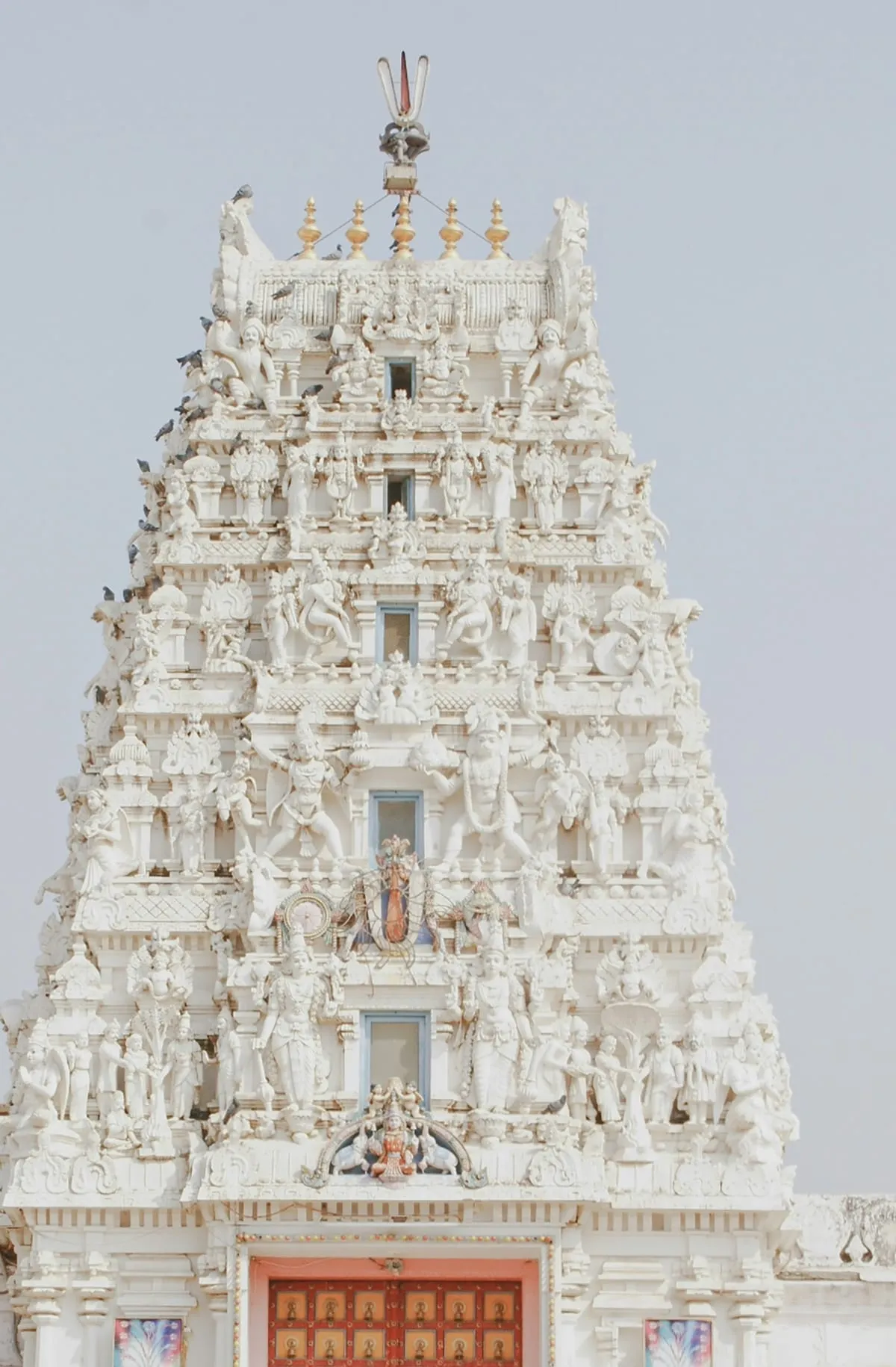
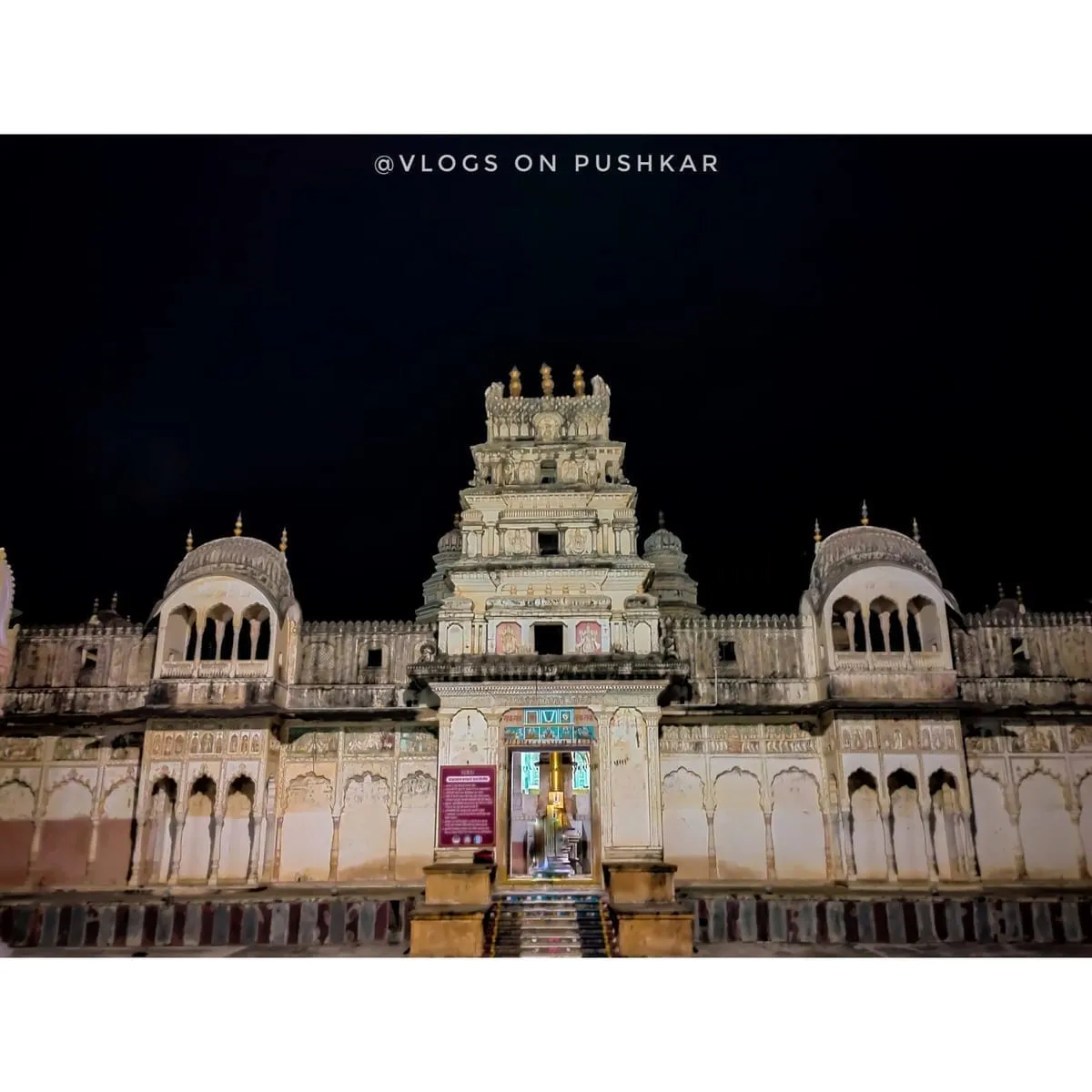
- A towering Dravidian gopuram (gateway tower) richly adorned with stucco figures of gods and goddesses
- Intricate Rajput ornamentation on the inner walls, blending local craftsmanship with southern motifs
- A spacious courtyard surrounded by carved pillars, providing a serene space for meditation and gatherings
- The complex spans roughly 90,000 square feet, making it one of the largest temple complexes in Pushkar
- All four corners of the temple are embedded with stone carvings of Garuda (the mythical eagle mount of Vishnu) to spiritually safeguard the perimeter
Complex Layout & Smaller Shrines
While Lord Rangji sits in the central sanctum sanctorum (Garbhagriha), the complex operates like a miniature sacred village. Inside the outer walls, there are 8 smaller, compact shrines dedicated to supporting deities and saints, including:
- Goddess Lakshmi — The goddess of wealth and Vishnu's consort
- Lord Krishna
- Goddamaji (Andal)
- Shri Ramanujacharya — The foundational theologian of the Sri Vaishnava Sampradaya
Frescoes & Art
The temple walls are adorned with exquisite Shekhawati-style frescoes, a distinctive art form from the Shekhawati region of Rajasthan. These vibrant paintings depict scenes from the Krishna Leela and the Ramayana, bringing the epic narratives to life in rich detail.
Old paintings on the walls showcase the artistic traditions of the 19th century, with natural pigments and fine brushwork that have remarkably withstood the test of time. The frescoes are considered some of the finest examples of temple art in Rajasthan, drawing art historians and photographers from around the world.
The internal walls are decorated using the Aarish (Alagila) plaster technique — a traditional Rajasthani method of wet lime-plastering. Using all-natural vegetable and stone pigments, the artists painted elaborate murals depicting the Dashavatara (ten avatars of Lord Vishnu), scenes from the Samudra Manthan (churning of the cosmic ocean), and tales of Krishna Leela.
Key Festivals & High Seasons
March / April (Chaitra Month)
The annual Chariot Festival — deities are placed on an enormous wooden chariot and pulled through the streets of Pushkar by thousands of devotees.
October / November (Kartik Month)
The temple undergoes grand decorations and special evening aartis to welcome the massive influx of pilgrims arriving for the annual Camel Fair.
Timings & Darshan
6:30 AM. The first aarti of the day, a serene way to begin your temple visit.
6:00 PM. The evening lamp ceremony fills the temple courtyard with a divine glow.
6:00 AM – 7:00 PM daily. Open throughout the day for darshan and prayer.
Vaishnava festivals like Janmashtami and Ekadashi are celebrated with special ceremonies. Contact the temple office for details.
How to Reach
The Old Rangji Temple is located in the heart of Pushkar, making it easily accessible on foot from most parts of the town.
- From Pushkar Bus Stand: 5-minute walk (400m)
- From the main ghats: 8-minute walk (600m)
- From Ajmer (nearest railway station): 14km — take a shared taxi, auto-rickshaw, or local bus