
The Mythological Legend
In Hindu theology, this temple in Pushkar is recognised as a Swayamvyakta Kshetra — one of the eight premium self-manifested shrines of Lord Vishnu. Local folklore and the Puranas narrate two major stories connected to this holy spot.
Rescuing Mother Earth
When the demon Hiranyaksha dragged the Earth (Bhudevi) down into the primordial cosmic waters, Lord Vishnu assumed the form of a gigantic boar. Using his supreme sense of smell, he tracked down the Earth, fought the demon for thousands of years, and lifted her back to safety on his tusks. The main idol features a human body with a boar's head, holding a silver disk that represents the Earth.
Protector of the Holy Yagya
Another legend states that when Lord Brahma was performing his grand cosmic sacrifice (Yagya) at Pushkar Lake, demons attempted to disrupt the ritual. Lord Vishnu appeared as Varaha at what is now known as Varah Ghat to guard the ceremony. Afterwards, Brahma requested him to reside permanently in Pushkar to protect the holy town.
A Turbulent Timeline of Survival
The stones of the Varaha Temple tell a dramatic story of destruction, religious conflict, and revival. Looking closely at the architecture reveals how sections of the temple belong to completely different eras.
Architectural Breakdown
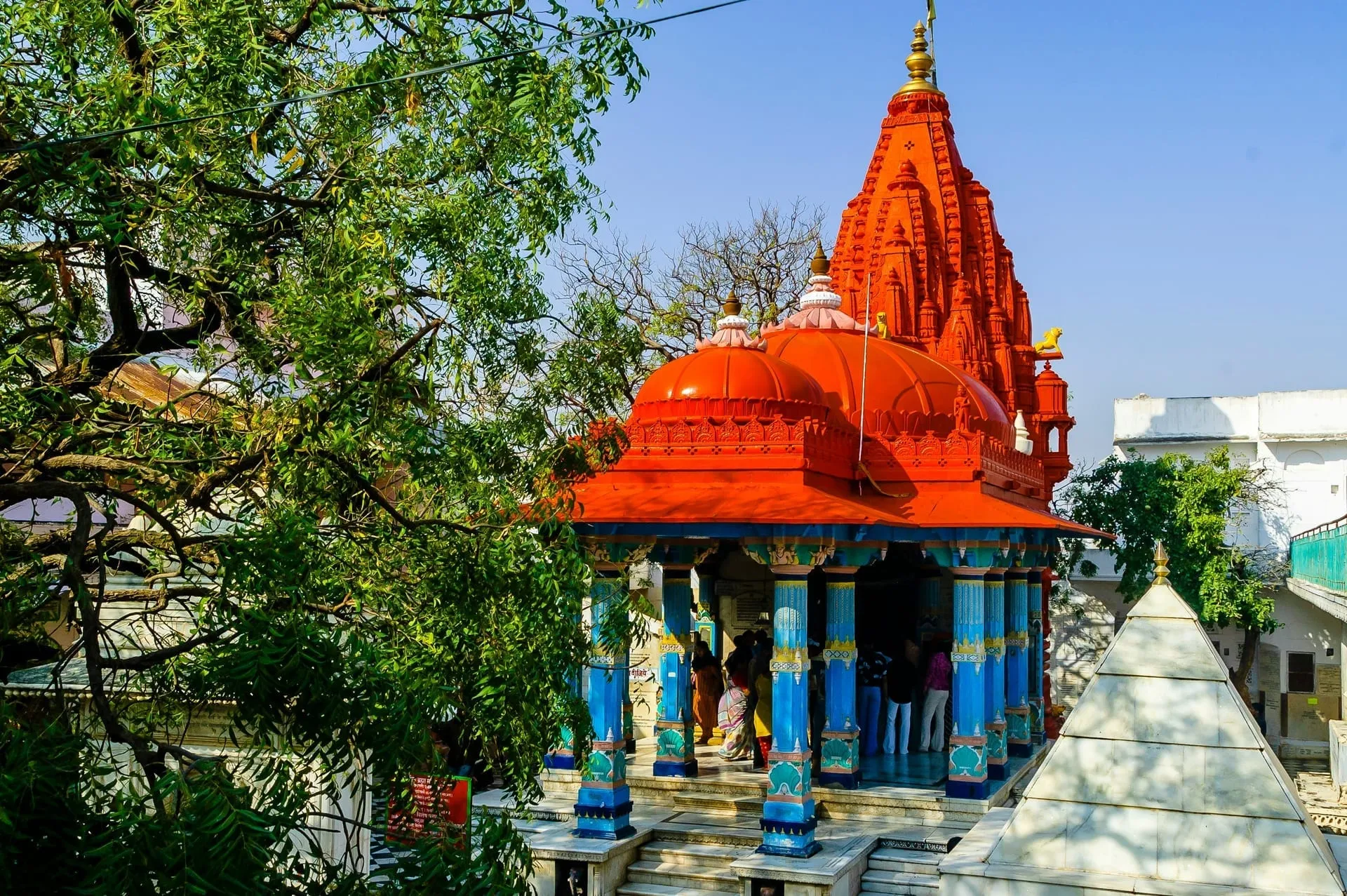
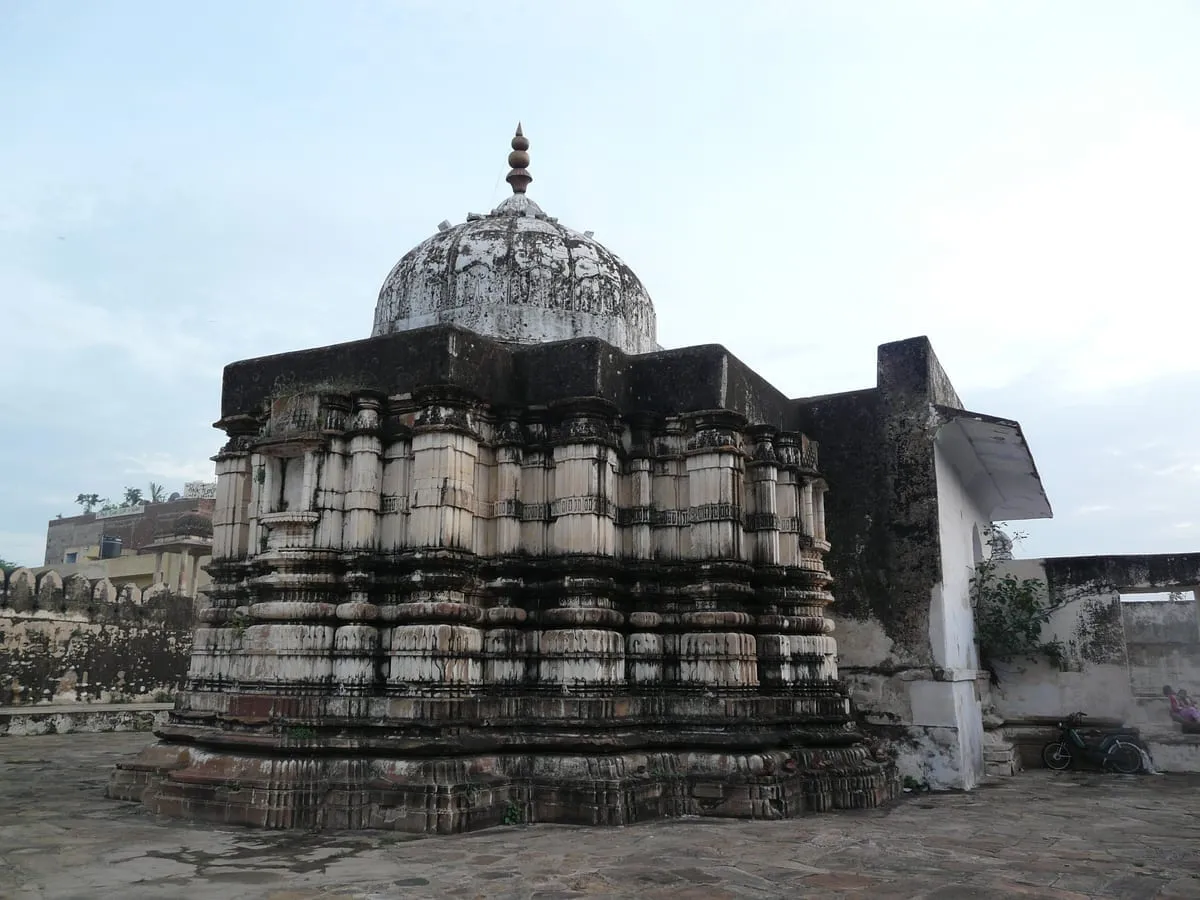
Unlike the vibrant, modern colours of many contemporary Indian shrines, the Varaha Temple retains a weathered, fortress-like aesthetic.
- The Fortified Exterior: Because it was repeatedly attacked, the temple was rebuilt with thick, high walls resembling a small fort (Haveli style).
- The Entrance: You have to climb a flight of about 40 steep stone steps to reach the main courtyard. The massive gateway can be seen from quite a distance down the street.
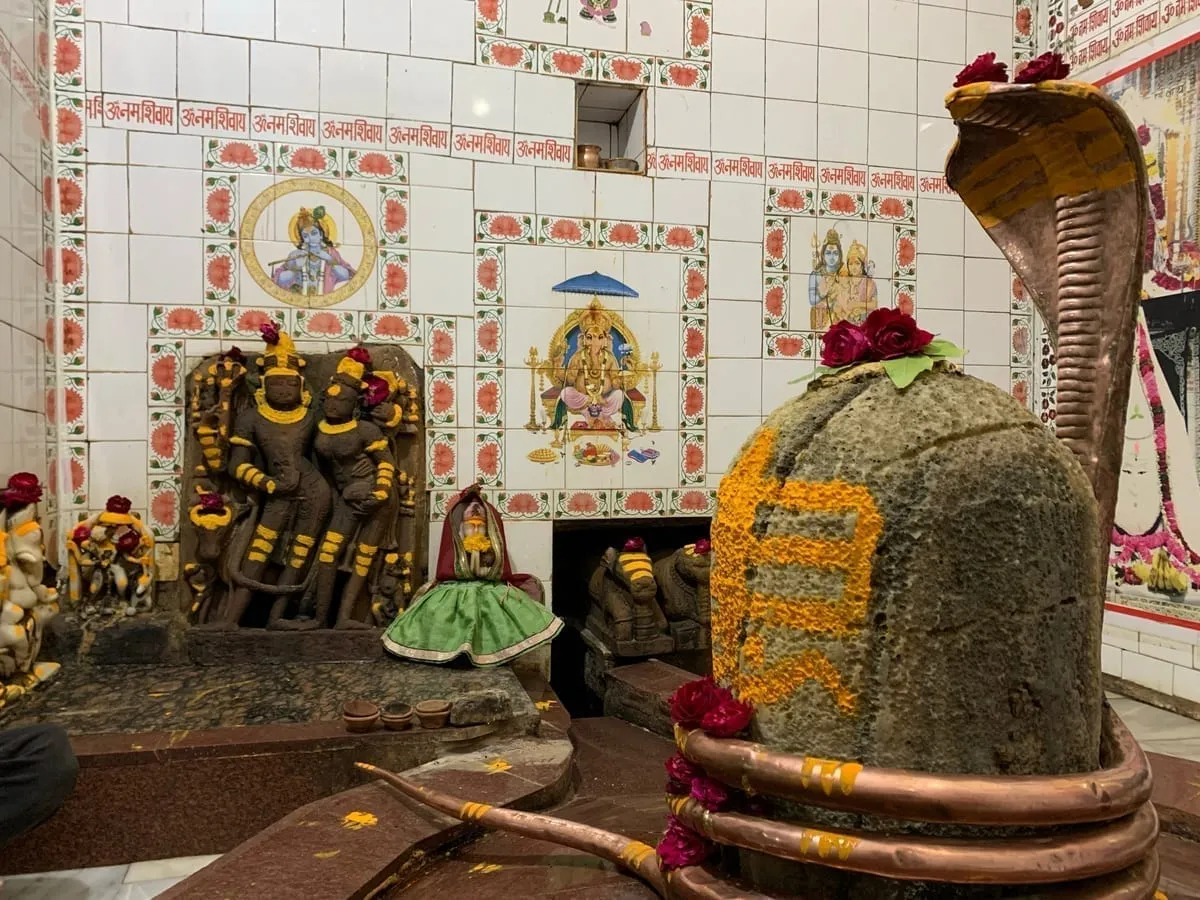
- The Sanctum & Carvings: The inner walls and pillars are adorned with intricate carvings of celestial beings, mythical creatures, and depictions of Vishnu's various avatars. Keep an eye out for the beautifully styled pillars dedicated to Garuda (the mythical bird and vehicle of Vishnu) and the life-sized stone doormen (Dwarpala) guarding the inner sanctum.
Quick Facts for Visitors
6:00 AM – 12:00 PM & 4:00 PM – 8:00 PM (Daily)
Free
30 to 45 minutes
Roughly 500 metres from the Pushkar Bus Stand (an easy 10-minute walk from the Brahma Temple)
Between October and March (winter months). Festive energy during Kartik Purnima / Pushkar Camel Fair.
How to Reach
- From Brahma Temple: 10-minute walk (500m) through the narrow lanes of Pushkar
- From Pushkar Bus Stand: Roughly 500 metres — an easy walk
- From Ajmer (nearest railway station): 14 km — take a shared taxi or local bus