
The Shaktipeeth Legend (The 27th Shakti Peeth)
The Falling of Sati's Wrists
In the sacred town of Pushkar and according to Hindu mythology, when Goddess Sati sacrificed her life, a grief-stricken Lord Shiva carried her body and performed the Tandava (dance of destruction). To pacify him, Lord Vishnu used his Sudarshan Chakra to disintegrate Sati's body into pieces. The pieces fell across 51 different locations across the Indian subcontinent, which became holy energy centres known as Shakti Peethas.
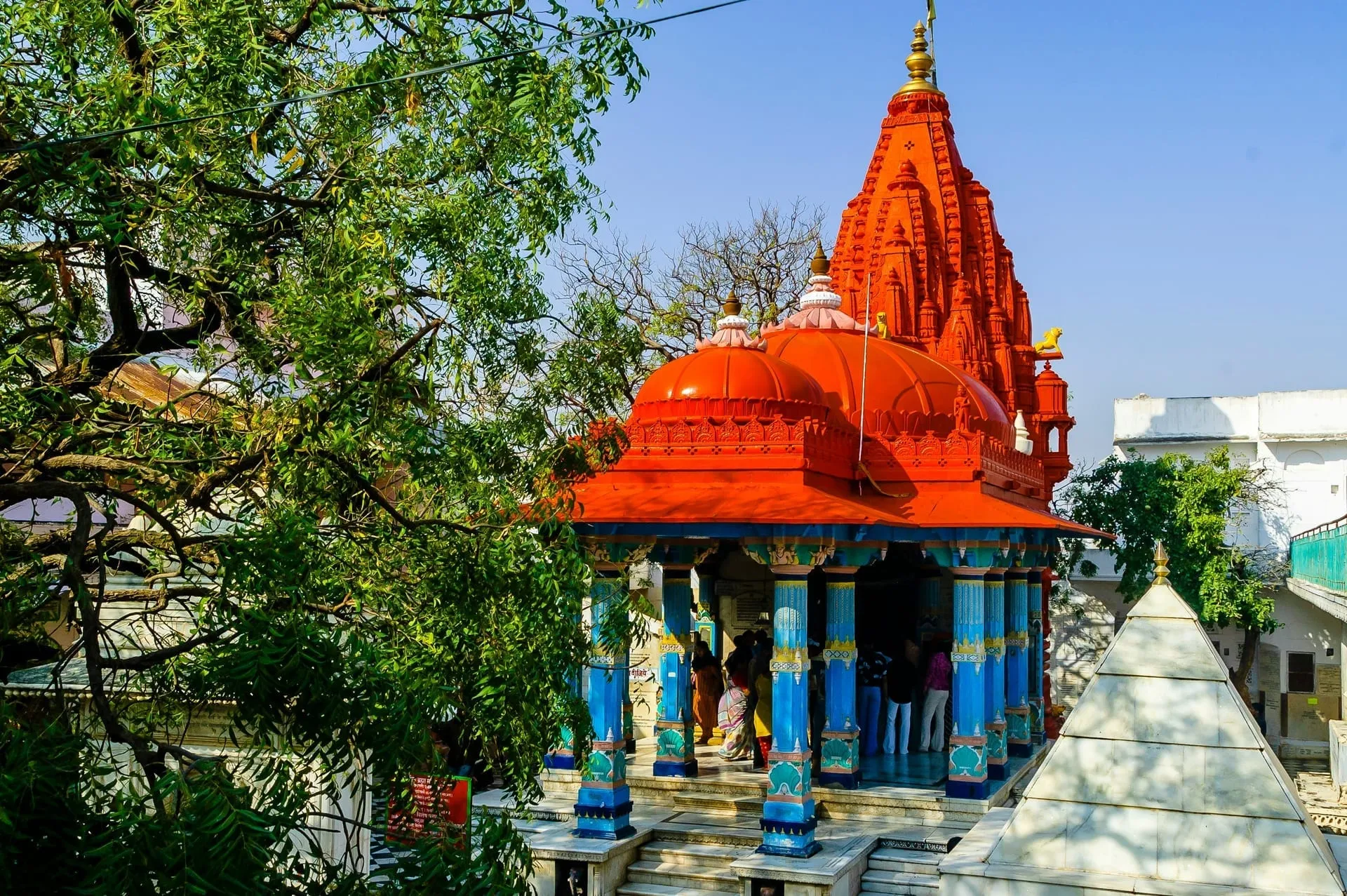
It is believed that Sati's wrists (Manibandh or Manivedika) fell on the Puruhoota Mountain in Pushkar, causing the mountain to tremble and leaving a deep crater. Consequently, this temple is revered as the 27th Shakti Peeth and formally known as the Shri Rajrajeshwari Puruhoota Manivedika Shaktipeeth. The accompanying Bhairava (Lord Shiva) of this Shaktipeeth is worshipped as Sarvanand (meaning 'he who brings joy to all').
Connection to Brahma's Yagna
According to temple priests, when Lord Brahma performed his grand Srishti Yagna (creation ritual) in Pushkar, the ritual could not be completed without Lord Shiva and a female consort sitting in pairs. To resolve this, Shiva invoked the energy of Mata Chamunda from this 27th Shakti Peeth so they could sit together and complete the yagna. This legend uniquely ties the Chamunda Mata Temple to the very creation mythology of Pushkar.
Location & History
Transition from Hilltop to Foothills
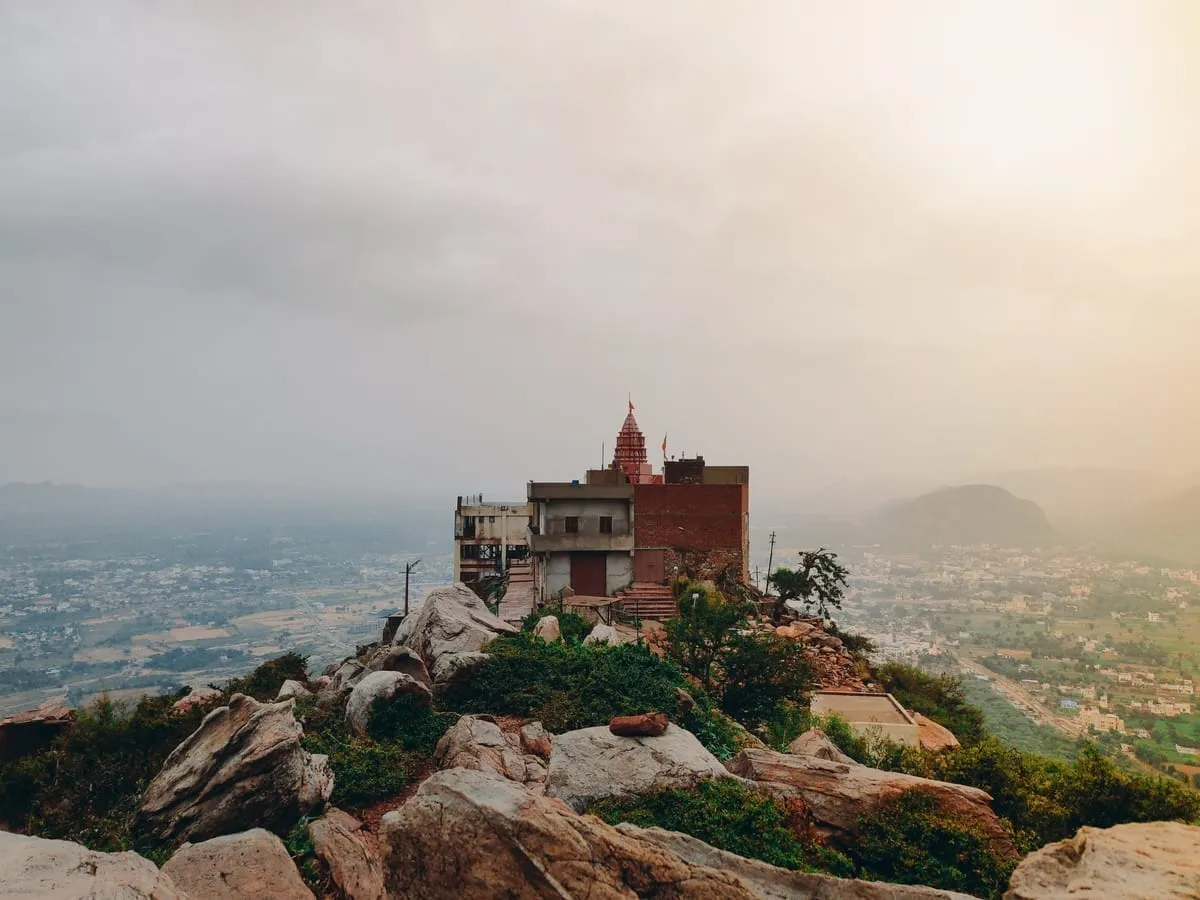
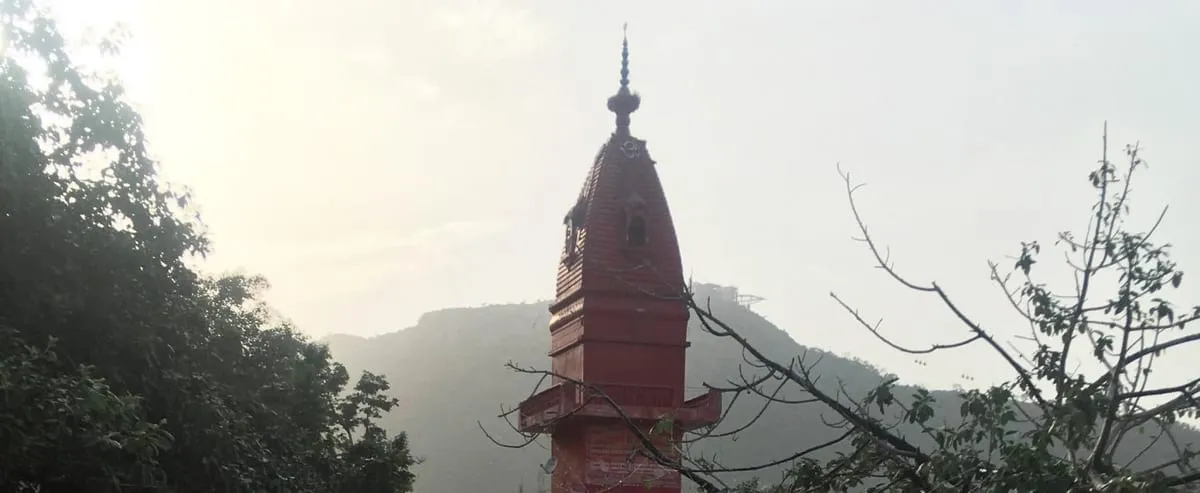
Originally, the sacred spot where Sati's wrists fell was high on the rugged and virtually inaccessible Puruhoota Hill (part of the Gayatri Hills). Because the path was dangerous and difficult for ordinary pilgrims, devotees and priests established a temple at the base and foothills of the mountain. This foothill temple is the Chamunda Mata Mandir visited today.
Geography
The temple is situated at the base of the Puruhoota Hill, nestled between Nag Hill and Savitri Hill, approximately 2 kilometres south of Pushkar Lake and roughly 11 kilometres from Ajmer. Unlike some of the busier temples in the centre of Pushkar, the Chamunda Mata Temple offers a peaceful, scenic, and meditative environment surrounded by hills.
Rare Sculptures & Architectural Features
The temple is unique for housing several rare and historically significant stone carvings:
- The main sanctum features extremely old statues of Shiva and Parvati, along with Goddess Kali on the left and Gauri Ganesh on the right — which local tradition dates back to the Treta Yuga.
- The temple houses a beautifully carved, rare sculpture of Lord Shiva and Goddess Parvati in an embrace. Because of this unique depiction of divine union, the temple is also affectionately called Priya Peeth (the seat of love), where couples visit to seek blessings for harmonious relationships. (These statues are occasionally kept veiled and shown upon request.)
- Another rare sculpture depicts Goddess Saraswati and Goddess Lakshmi seated together in a side-embrace atop a bull — a unique iconographic combination rarely found elsewhere.
Spiritual Practices & Meditation
Gayatri Mantra Sadhana
Because the temple is also dedicated to Goddess Gayatri (who sits on the Puruhoota Hill alongside Mother Shakti), it is considered one of the most auspicious locations in India for Gayatri Mantra meditation. Devotees and spiritual seekers visit the quiet, hill-facing temple premises to perform deep sadhana (meditation).
Festivals & Celebrations
Navratri
This is the most vibrant and important period for the temple. During both the spring (Chaitra Navratri) and autumn (Sharad Navratri) festivals, the temple is intricately decorated. Elaborate yagnas (fire rituals) and jap sadhanas (continuous mantra chanting) are conducted over the nine days, attracting thousands of pilgrims from across India.
Daily Aarti
Standard morning and evening prayer services are performed daily to keep the temple energised. The evening aarti is considered particularly powerful by devotees.
Timings & Darshan
~7:00 AM. A serene way to begin the day at the Shaktipeeth.
~6:00 PM. The evening lamp ceremony — considered the most powerful time to visit.
6:00 AM – 7:00 PM daily. Open throughout the day for darshan and prayer.
Special yagnas and ceremonies held twice a year during Chaitra (spring) and Sharad (autumn) Navratri.
How to Reach
Located roughly 2 km south of the main Pushkar Lake, the temple offers a peaceful retreat away from the town centre.
- From Pushkar Lake: 2 km south — a pleasant 20-minute walk or short auto-rickshaw ride
- From Pushkar Bus Stand: 5-minute walk (400m) behind the Marwar Bus Stand
- From Ajmer (nearest railway station): 11 km — take a shared taxi or local bus